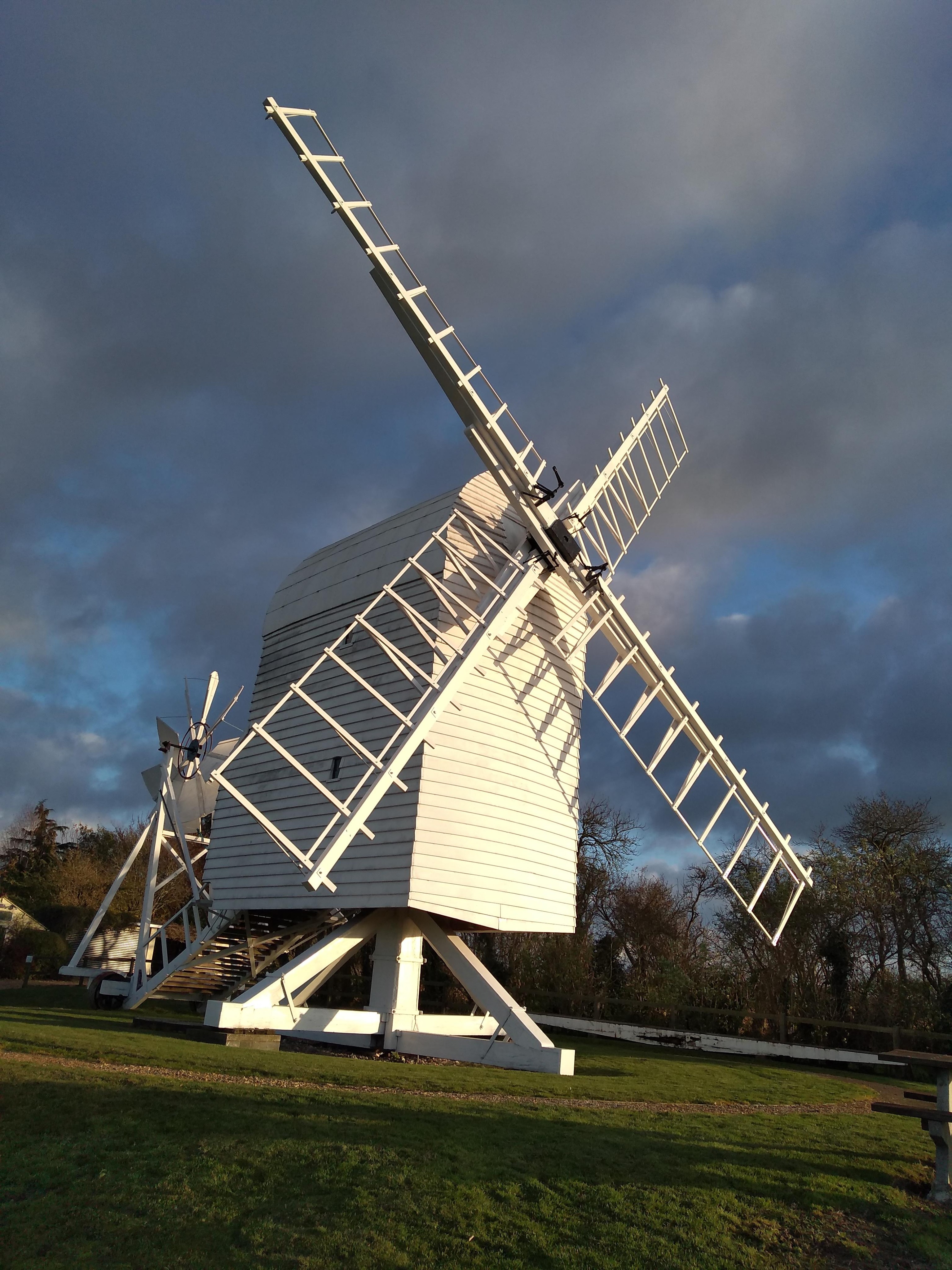
Wimpole has been continuously occupied for at least 2,000 years, with evidence from Roman, Anglo Saxon and medieval times. The earliest maps show a four-gabled manor house surrounded by a moat. Nowadays the extensive estate comes under the auspices of the National Trust.
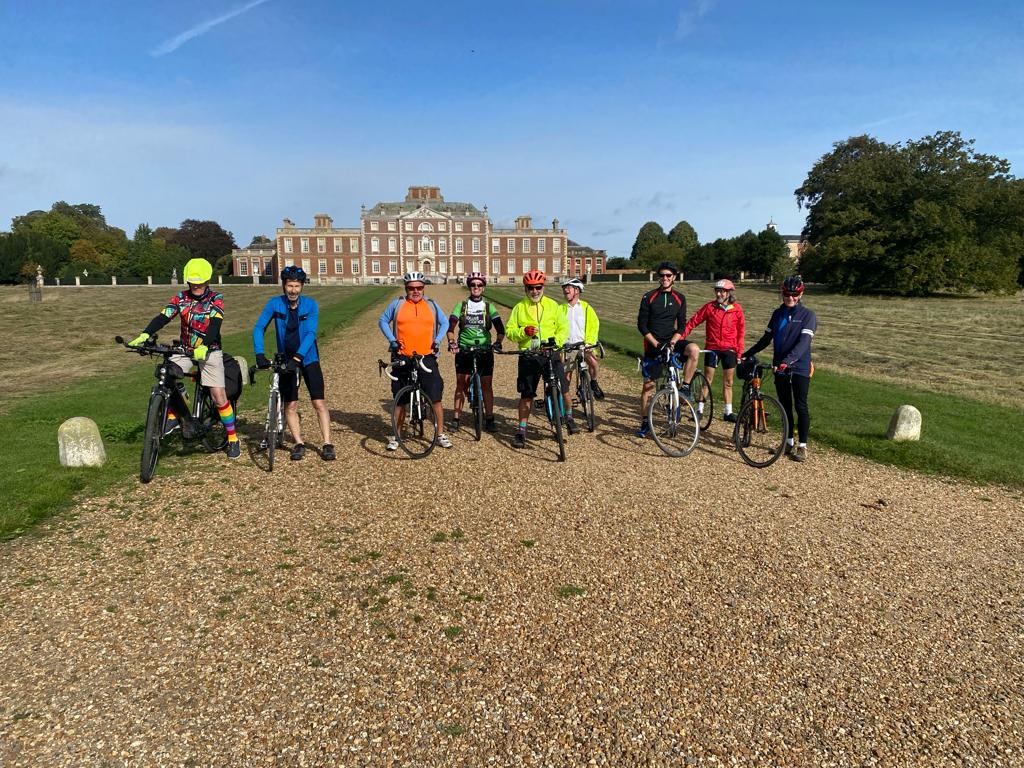
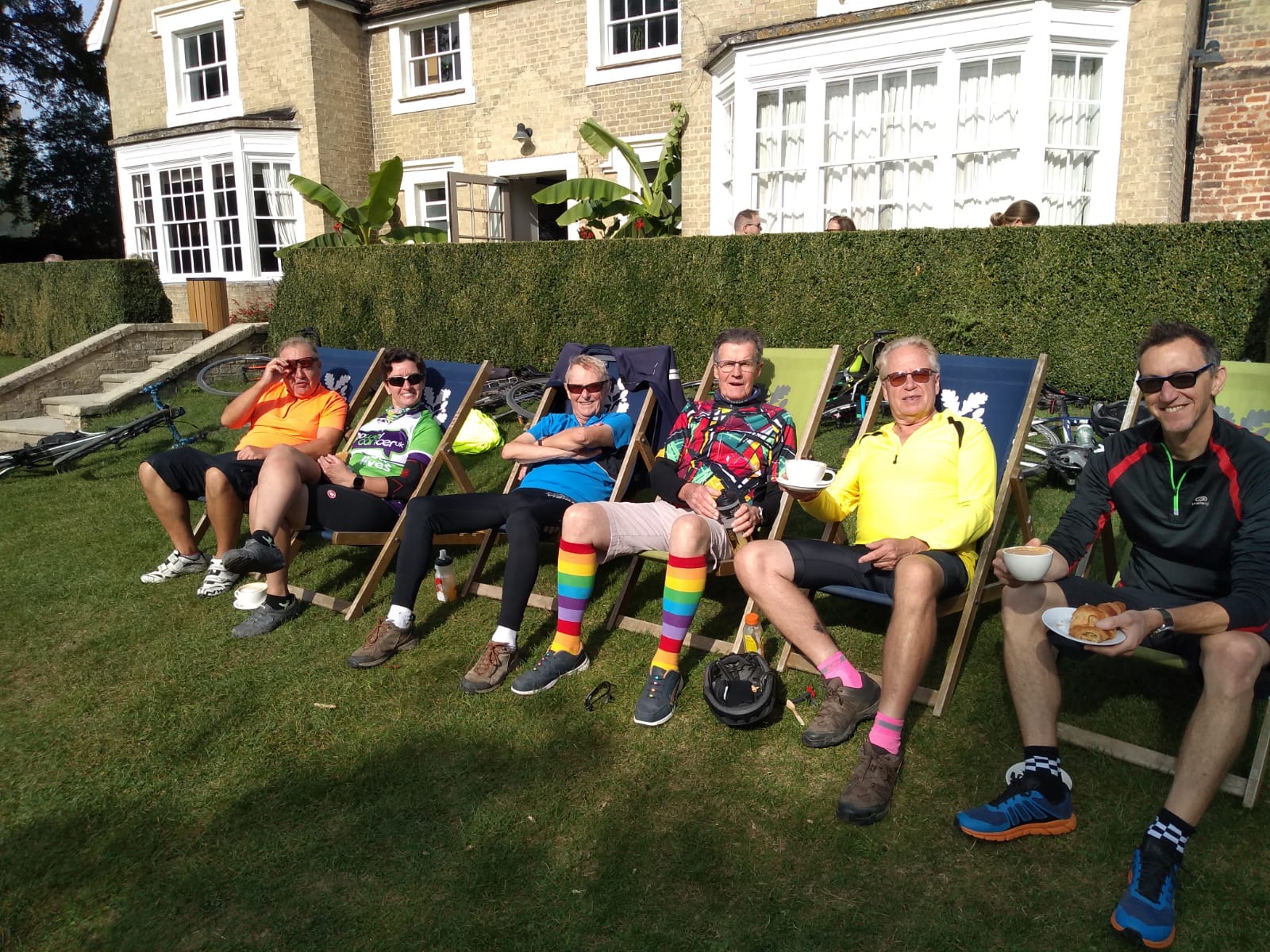
These gentile surroundings form such an unlikely setting for the unseemly scrum for available deckchairs that occurred last Thursday. And the perpetrators of this unseemliness ? It turns out it was the vanguard of the Windmill cyclists laying claim to all of the available sunbeds and, without any remorse, leaving their later arriving club mates to look around in vain for seating.
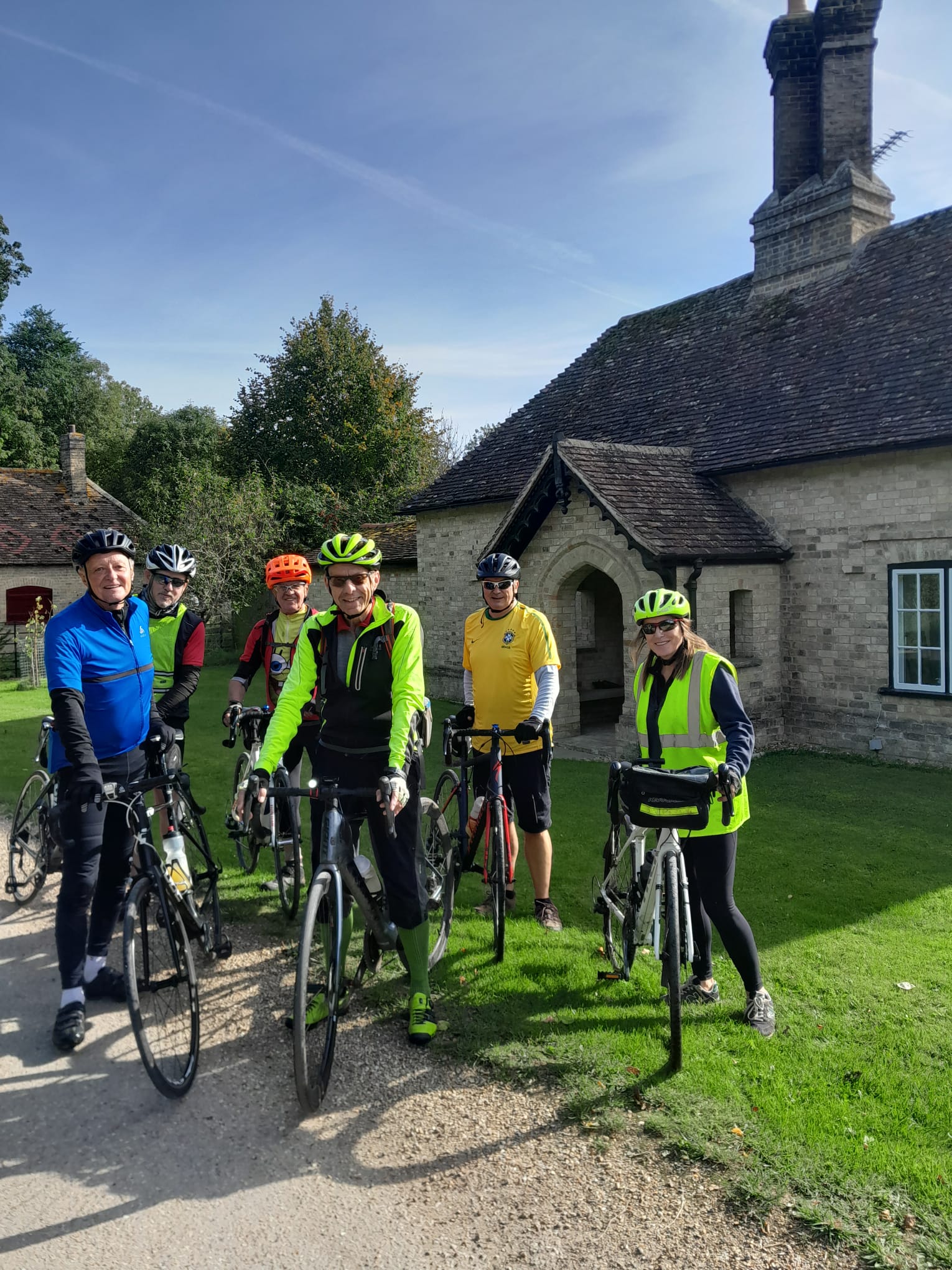
On any normal October day the competition for sunbeds would be somewhat more muted, but for this ride the weather played ball and the National Trust cafe had arrayed a number of deckchairs out on their lovely lawn in the sunshine. Unfortunately, that number of chairs was fewer than the 18 Windmill riders that had set off from cafe 19, Duxford that morning !
I would like to report that the three groups on the road progressed from Duxford to Wimpole via the short but sharp Chapel Hill over to Barrington and around the multi-use path around the estate without incident.
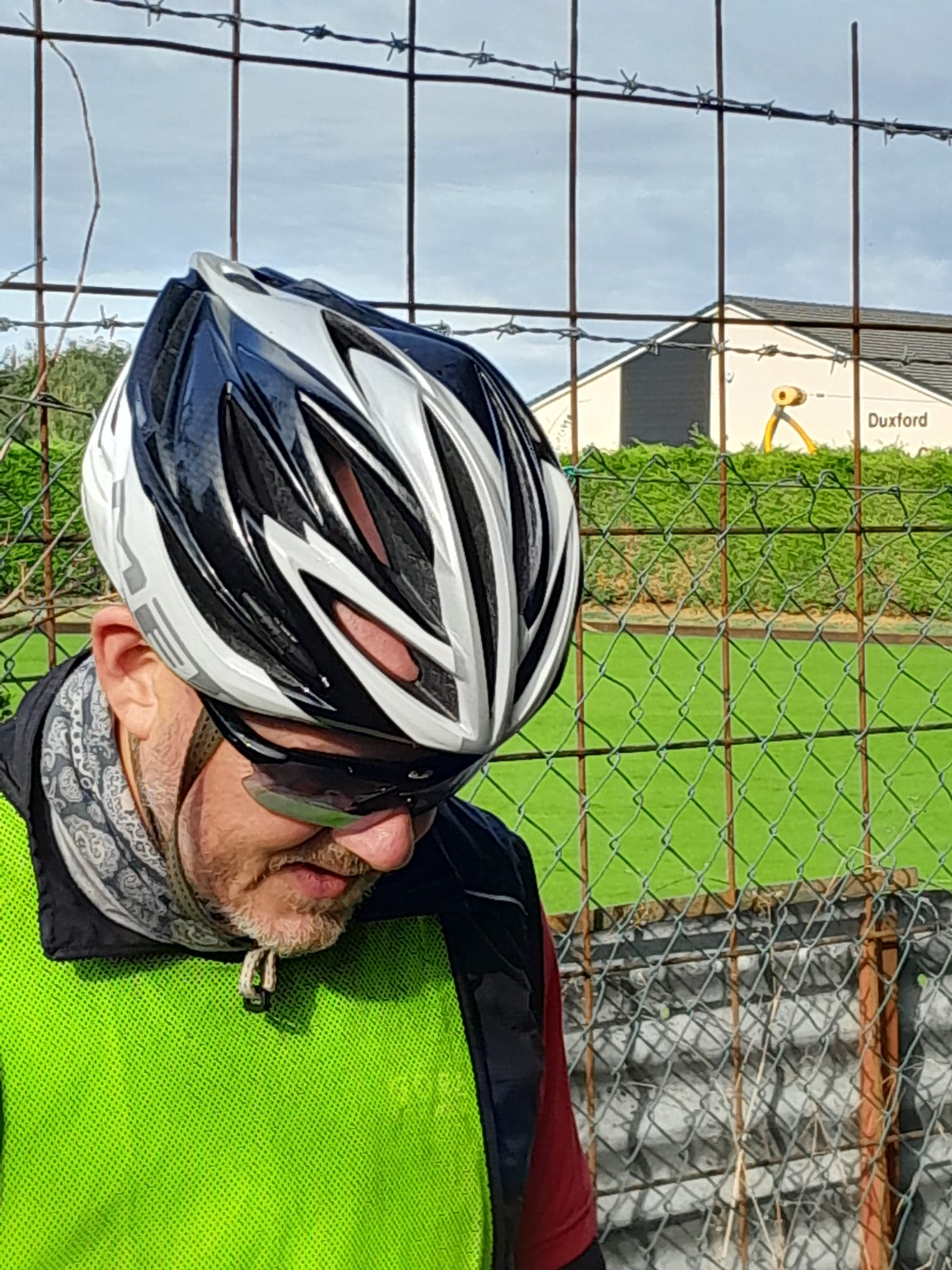
Unfortunately, this would not be true. Group three had barely travelled 100 metres from the cafe before Paul reported a back wheel puncture. This shouldn’t have been a particular issue – fingers were warm, spare inner tubes abounded and we had ace technician Tom in the group. We hadn’t bargained on a faulty replacement tube, however, which promptly blew out its valve once having been laboriously pumped up by Paul (all the while asking for more volunteers to man the pump). Luckily the next tube proved more robust, and a CO2 inflator saved Paul from more sweat and effort *. Nevertheless group 3 were now half an hour behind schedule.
The return ride did pass without incident via Shepreth and Fowlmere. Following breeze and no hills. Thanks to Jeremy for organising this ride and the weather gods for the fine conditions.
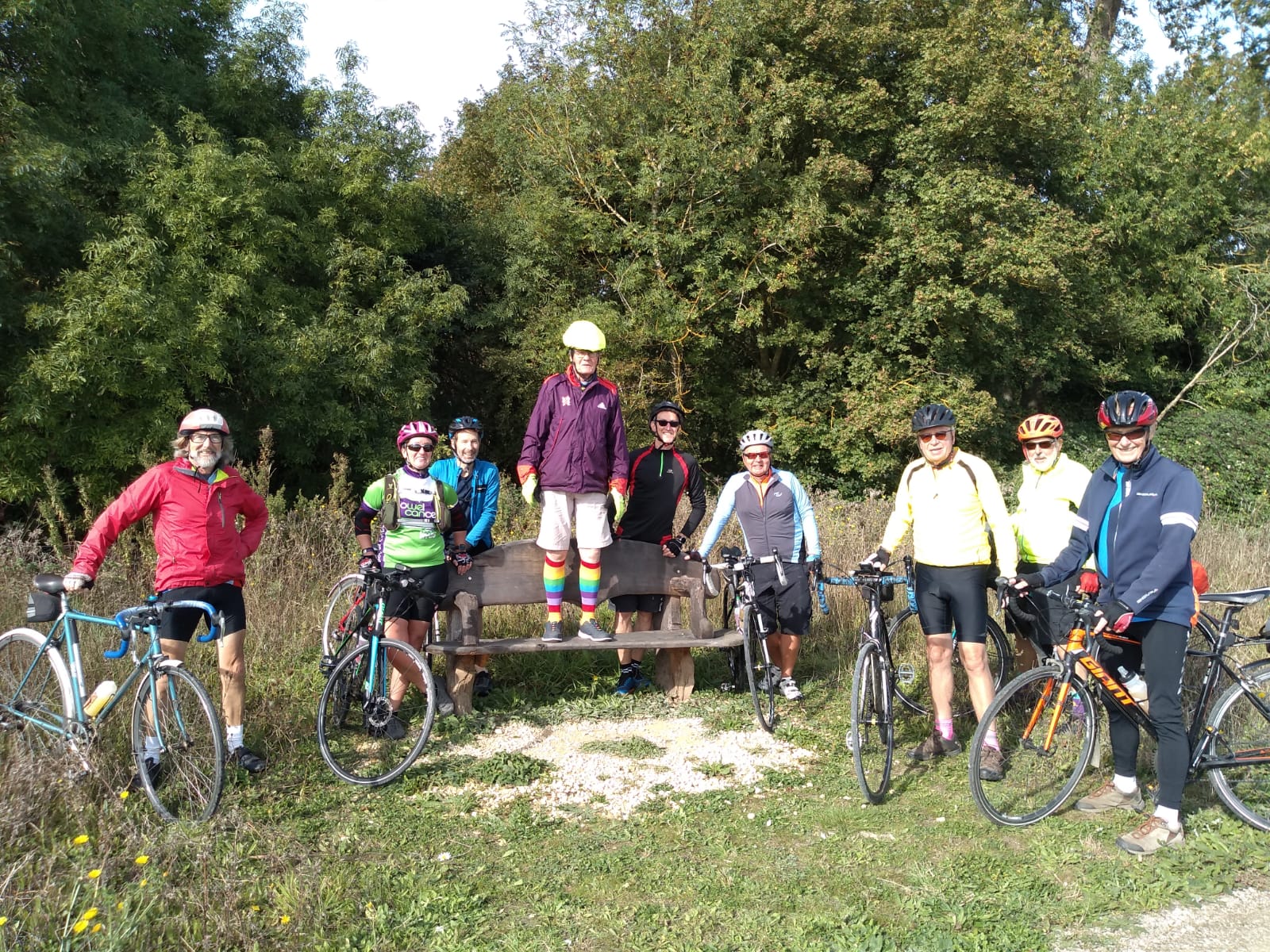
Apologies if I’ve missed name checking anyone here: Jeremy, Andrew, Charles, Alan, Keith, Deborah, Graham, Paul, Tom, Roger, Graham, Sandra, Ken, Simon, Victor, Gareth, Ric, Rod.
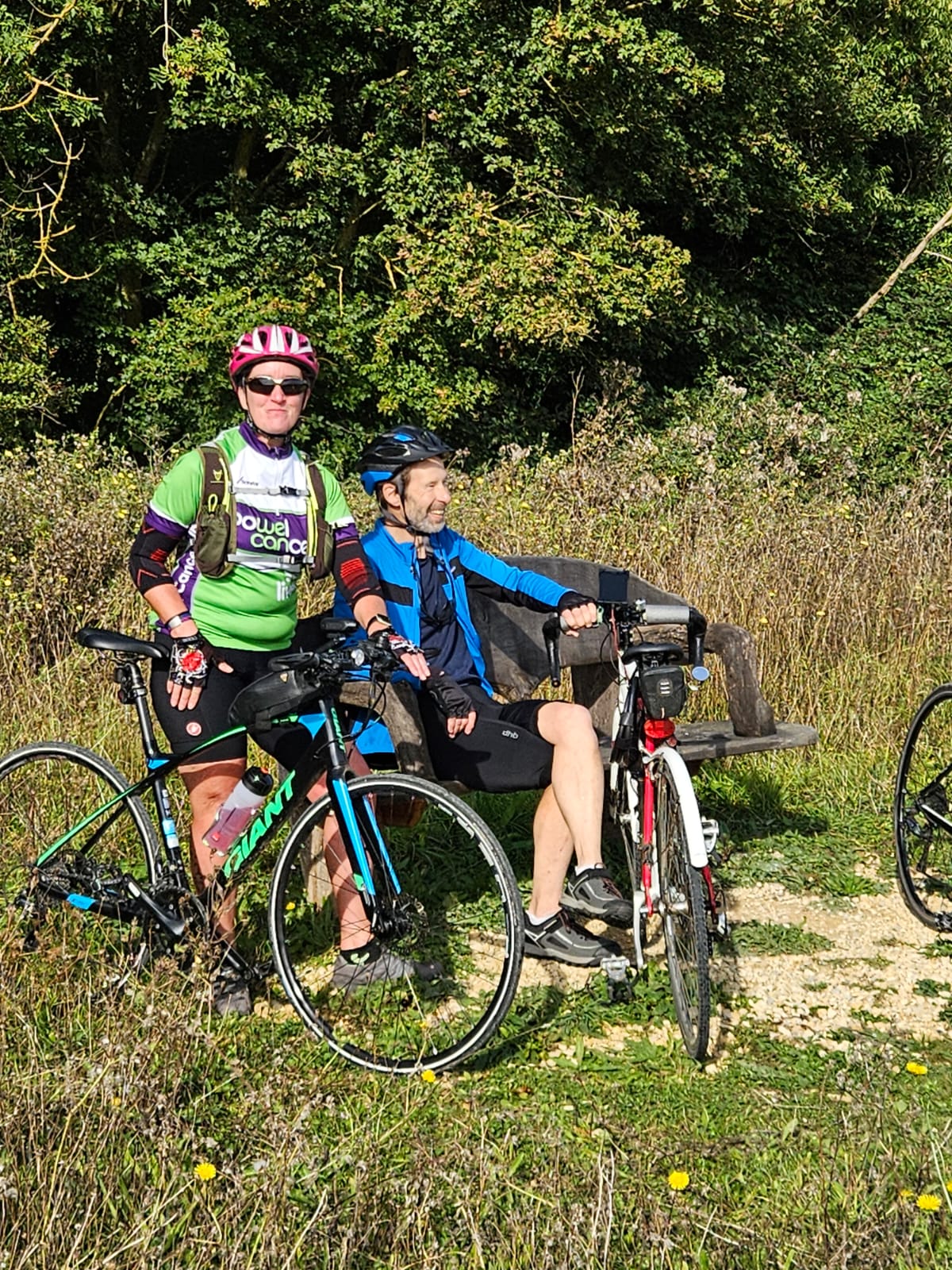
* CO2 cannisters are great for quick roadside tyre inflation but there are a few things to look out for:
- Best get an inflator with a proper tap on it rather than a marginally lighter ‘one shot’ push on type.
- The tyre pressure gets high very quickly. If in your haste you had the inner tube trapped under the outer rim, it WILL blow out. With a bang.
- The CO2 cannister will get very cold. Do not handle with bare hands !
- Tyres are more porous to CO2 than normal air, so when you get home, let the CO2 out and re-inflate with a normal pump.
 The Windmill Cycle Club
2 replies on “Who bagged all the sunbeds ?”
The kinematic/molecular diameters of carbon dioxide are smaller (0.33 nm) than those of nitrogen (0.364 nm), that’s true. But if it were possible to selectively pass CO2 through old inner-tubes, while retaining air (nitrogen), then that would be used to save the planet by constructing a selective CO2 extracting machine from old inner-tubes.
I fear however, that saving the planet will be more difficult and expensive than this.
I think what is happening is that a CO2 filled tyre appears to go down a bit because CO2 has a much higher boiling point than air (nitrogen) so shrinks more when going from warm (after a cycle, frictional heating) to cold after being left in the garage. (you can think of it as the CO2 getting nearer it’s liquifying point as it cools, compared to N2)
LikeLike
I never did get to the bottom of the physics of it. I mean, its definitely an observable thing: CO2 inflated tyres noticeably lose pressure over a couple of days whereas air inflated tyre much less so. I’d assumed it was something to do with osmotic pressure combined with porosity, but its not really my field !
LikeLike